
News
Court orders EFCC to unfreeze Dokpesi’s account

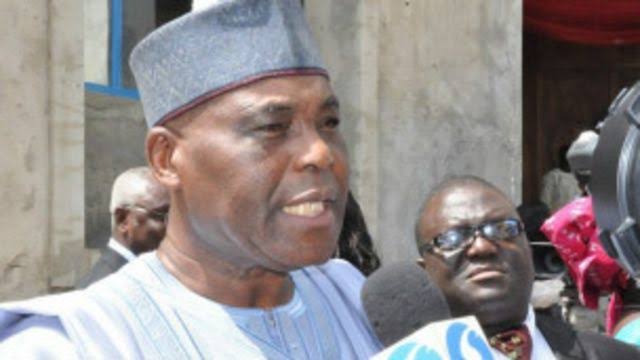
The Chief Judge of the Federal High Court, Justice John Tsoho on Tuesday in Abuja, issued an order unfreezing the bank account of the Chairman of Daar Communications Plc, Raymond Dokpesi.
Justice Tsoho gave the order while delivering a ruling on Dokpesi’s application argued by Kanu Agabi, SAN.
The judge ordered that the account domiciled at First Bank be immediately ‘unfrozen’ since the criminal charges which precipitated the restriction on the account had been dismissed and Mr Dokpesi discharged and acquitted by the Court of Appeal.
The judge said that the Economic and Financial Crimes Commission, EFCC, had no basis to put a post no debit order on the account in view of the subsisting and valid judgment of the Court of Appeal.
He held that there was no application by the EFCC for stay of execution of the appellate court’s judgment which quashed the criminal charges against Mr Dokpesi.
Justice Tsoho said that in the absence of a stay of execution, the court was bound by law to recognise the judgment of the appellate court.
He ordered that the freeze order and post no debit on the account be immediately removed in compliance with the appellate court’s judgment.
Ruling on the claim by the EFCC that it had appealed the appellate court’s decision at the Supreme Court, the judge held that the notice of appeal filed at the apex court could not in law stay the execution of the subsisting judgment .
He added that the anti-graft agency ought to have obtained a stay of execution of the judgment.
He further ordered that all documents seized from Dokpesi should be immediately returned to him.
Mr Agabi, while making arguments in support of the application, prayed the court to issue an order unfreezing Dokpesi’s bank account frozen on the strength of the alleged N2.1 billion fraud charge against him.
The senior lawyer had submitted that the criminal charges in respect of N2.1 billion had since been dismissed by the Court of Appeal Abuja division but the EFCC wanted to continue to hold his client in bondage.
Mr Agabi had further argued that the charge which led to freezing of the account no longer existed following the decision of the appellate court on the matter.
He had tendered two judgements of the Court of Appeal to establish his claim that the criminal charges against Dokpesi had been quashed.
He held that until the judgments were set aside the EFCC could not continue to freeze his client’s account.
However, EFCC counsel, Oluwaleke Atolagbe had opposed the application on the grounds that the anti- graft agency had already filled a notice of appeal against the appellate court’s judgment at the apex court.
Mr Atolagbe had urged the court not to unfreeze the account yet until the final decision of the Supreme Court in the matter adding that the N2.1 billion logged in the frozen account formed the basis of the charge.
He also opposed to the request for the release of Dokpesi’s document in possession of EFCC on the grounds that no specific document was mentioned in the request.
On April 1, a three-member panel of the Appeal Court in a unanimous judgment freed Dokpesi from the charges after it held that the prosecution failed to establish the ingredients of the charge.
The EFCC had in 2015 dragged Dokpesi to court accusing him and his company of illegally receiving funds considered as proceeds of crimes from a former National Security Adviser (NSA), rtd Col. Sambo Dasuki.
He pleaded not guilty to the charges and went further to file a no-case submission after the prosecution closed its case in November 2018 after calling 14 witnesses.
However, the trial judge, Justice Tsoho, rejected the no-case submission and ordered Dokpesi and his firm to enter their defence.
Not satisfied, the defendants then approached the Court of Appeal, with a request to nullify the decision and free him from the charges on the grounds that the prosecution failed to establish a prima facie case against them.
In the unanimous judgment delivered by Justice Elfreda Williams-Dawodu, the appellate court agreed with the appellants that the case of the respondents lacked merit having “failed woefully to establish a prima facie case against the appellant”.
According to the judgment, for any case to be established against the defendants, it is necessary to first prove the ingredients of offence in the predicate offences in counts 1 to 4 of the seven-count charge which bordered on criminal breach of trust, division of funds, money laundering and corruption.
The court further held that EFCC failed to prove that the N2.1 billion allegedly received by the appellant was a proceed of breach of trust and accordingly set aside the decision of the lower court which held that the appellants had a case to answer.
“No case was made against the appellant in counts 1, 2, 3 and 4 to warrant his being called upon to open his defence.
“There is no possibility that the appellant can be convicted because the evidence are manifestly unreliable.
“I am of the view that irrespective of the ingredients stated earlier, and those by the appellant and first respondent respectively, prior proof or establishment of the predicate offences in count 1,2,3 and 4 of the amended charge is sine qua non to the proof of the offences of money laundering specified in the said counts.
NAN




A youth-led organisation, Inclusive Development (INCLUDE), has unveiled the Change-Maker’s Public Policy Guide, a new resource aimed at empowering young Nigerians with the skills and knowledge needed to participate actively in governance, policymaking, and accountability processes.
The guide was launched in Abuja on Friday at the conclusion of a five-week intensive capacity-building programme designed to strengthen youth engagement in public policy development and civic participation.
Speaking during the unveiling, the Executive Director of Inclusive Development, Bukola Taiwo, said the initiative was created to address the gap between young people’s desire to influence governance and their understanding of how public policy systems operate.
According to her, many young Nigerians are eager to contribute to governance but often lack the practical knowledge required to engage effectively with policy structures and decision-making processes.
Taiwo explained that the programme trained 20 young participants in key areas of public policy, governance, and accountability. Of the participants, 17 successfully developed policy briefs addressing critical issues affecting their communities and the country.
She noted that the trainees collaboratively developed the Change-Maker’s Public Policy Guide as a practical resource to help young Nigerians navigate policy processes at both national and sub-national levels.
“The programme focused on amplifying the voices of young people in public policy discussions and equipping them with the skills needed to engage governance and accountability systems effectively,” she said.
She added that the guide was designed to help emerging changemakers understand how policies are formulated, identify opportunities for engagement across different levels of government, and contribute meaningfully to governance reforms.
The training programme covered several aspects of policy development and advocacy, including policy research, systems thinking, power mapping, problem analysis, and strategic storytelling.
Participants were introduced to analytical tools such as systems change frameworks, power mapping models, and problem analysis techniques to enhance their ability to identify policy challenges and propose evidence-based solutions. The programme also highlighted the role of storytelling in shaping public discourse and influencing policy outcomes.
The initiative was organised by Inclusive Development (INCLUDE) with support from the Nigeria Youth Futures Fund and the Amandla Institute for Leadership and Policy Advancement.
Taiwo reaffirmed the organisation’s commitment to empowering young people, particularly those from underserved and marginalised communities, to participate meaningfully in governance and development processes.
Inclusive Development (INCLUDE) is a youth-led organisation dedicated to promoting equity, peace, and justice through initiatives that empower underserved populations. The organisation operates at the intersection of governance, peacebuilding, and gender justice to advance sustainable development in Nigeria and across Africa.
Stakeholders at the event described the guide as a timely intervention capable of deepening youth participation in policymaking and fostering stronger connections between citizens and governance institutions.


Fresh allegations of large-scale financial irregularities, abuse of office, and governance breakdown have engulfed the Nigeria Social Insurance Trust Fund (NSITF), following a series of petitions by the Arewa Revival Project, a civic accountability and good-governance advocacy group, calling for urgent investigations into the activities of the Managing Director/Chief Executive Officer, Mr. Oluwaseun Mayomi Faleye.
The group has formally written to the Economic and Financial Crimes Commission (EFCC), the Independent Corrupt Practices and Other Related Offences Commission (ICPC), the Office of the Auditor-General of the Federation, the Federal Ministry of Finance under the Whistleblower Policy, the Federal Ministry of Labour and Employment, the NSITF Management Board, as well as organised labour bodies, including the Nigeria Labour Congress (NLC) and the Trade Union Congress (TUC).
At the centre of the controversy are allegations involving the management of approximately ₦297,019,145,288.60 in workers’ funds collected under the Employees’ Compensation Act (ECA) between January 2 and October 9, 2025.
Workers’ Funds, Not Government Revenue
The Employees’ Compensation Scheme is funded through compulsory employer contributions of one per cent of payroll, designed to provide compensation to Nigerian workers who suffer injury, disability, or death in the course of employment.
According to multiple senior NSITF officials cited in investigative reports, the funds administered by NSITF are not government revenue, but trust funds belonging exclusively to Nigerian workers.
“This is not government money. This is workers’ money, contributed mandatorily under the law,” one senior official was quoted as saying. “Every kobo is supposed to be protected by layers of checks and balances.”
₦243.2bn Allegedly Spent Without Board Approval
Documents reviewed by investigators indicate that out of the total inflow of ₦297,019,145,288.60, expenditures amounting to ₦243,203,518,621.17 were recorded within the same period.
Multiple sources allege that a significant portion of this expenditure was carried out without the approval of the NSITF Management Board, in violation of the NSITF Act and existing federal financial regulations.
Officials familiar with the records described the development as a “complete collapse of safeguards” meant to protect workers’ funds.
‘No Approval Limit’ Resolution Raises Alarm
Central to the allegations is an internal document dated March 4, 2025, reportedly extracted from the minutes of the 46th Executive Committee (EXCO) meeting of NSITF, chaired by Mr. Faleye.
According to the document, financial approval limits were set as follows:
- Other General Managers: ₦25,000
- General Manager (Finance): ₦50,000
- Other Executive Directors: ₦750,000
- Executive Director (Finance and Investment): ₦1,000,000

However, under the same resolution, the Managing Director/Chief Executive Officer allegedly approved “no limit” for his own spending authority.
Sources allege that this effectively granted Mr. Faleye unrestricted powers to approve payments of any amount without recourse to the Board or external oversight.
“He simply wrote and signed a document granting himself ‘No Approval Limit’,” a senior official disclosed. “There is absolutely no legal basis for this in the NSITF Act or federal financial regulations.”
Under existing federal thresholds, Managing Directors of government parastatals are reportedly capped at ₦30 million for works and ₦10 million for goods and services, subject to board oversight.
Over 100 Bank Accounts Linked to One BVN
Perhaps the most startling allegation involves the operation of over 100 bank accounts allegedly linked to a single Bank Verification Number (BVN) belonging to Mr. Faleye.
Documents reportedly show that the BVN, registered on June 10, 2015, with Guaranty Trust Bank, Ajose Adeogun Branch, is associated with numerous accounts, some of which allegedly received funds traceable to NSITF operations.
“The scale is staggering,” one insider said. “You don’t run over 100 accounts accidentally. This points to systematic structuring.”
$7.3m and Hundreds of Millions of Naira Traced
In a separate document obtained by investigators, alleged inflows of millions of dollars and hundreds of millions of naira were traced to accounts linked to Mr. Faleye and entities reportedly associated with him.
The transactions listed include:
- Faleye Oluwaseun Mayomisola, GTBank USD Account 0111206422 – $336,917.00
- Faleye Oluwaseun Mayomisola, GTBank USD Account 0004754113 – $6,743,421.00
- Faleye Oluwaseun Mayomisola, GTBank NGN Account 0004754096 – ₦291,182,605.00
- Fides & Fiducia Client Account, Access Bank NGN Account 0718896883 – ₦584,950,000.00
- Fides & Fiducia, Access Bank USD Account 0690403396 – $626,279.00
- Fides & Fiducia, Zenith Bank NGN Account 1013806407 – ₦93,757,500.00
- Pluschess Limited, Zenith Bank USD Account 071315271 – $20,000.00
- Faleye Oluwaseun Mayomisola, GTBank USD Account 3001101016 – $75,558.00
The total dollar inflow alone is estimated at over $7.3 million, excluding naira-denominated transactions.
“These are not small transfers,” a source familiar with the documents said. “The volume, frequency, and structuring suggest deliberate efforts to move and possibly conceal funds.”
₦5.53bn Commission Payments Questioned
Further allegations relate to commission payments totalling ₦5,533,517,486.90, allegedly approved and paid without the consent of the NSITF Management Board or the supervising Ministry.
The payments reportedly include:
- ₦1,379,186,010.00 – Assurance Services ST ADBA Ltd (09/10/2025)
- ₦865,000,000.00 – TAGG Global Resources Ltd (18/03/2025)
- ₦683,777,666.40 – Rate Seal Support & Project Ltd (17/09/2025)
- ₦659,303,810.50 – Rate Seal Support & Project Ltd (16/05/2025)
- ₦648,750,000.00 – Rate Gold Solution Nig Ltd (16/05/2025)
- ₦648,750,000.00 – Gold Solution Nig Ltd (01/08/2025)
- ₦648,750,000.00 – TAGG Global Resources Ltd (01/08/2025)

Sources allege that the commissions ranged between 15 per cent and 20 per cent, and were paid without lawful authority.
Board Absence and Governance Vacuum
Mr. Faleye was appointed Managing Director in July 2023, while the NSITF Management Board was reportedly not constituted until around January 2025, creating a governance gap of over one year.
“The Act expressly forbids Executive Management from spending funds without board approval,” a top official explained. “If there is no board, spending should not take place.”
Arewa Revival Project Condemns Alleged Acts
Reacting to the allegations, the Arewa Revival Project, under the leadership of Hon. Muttakka Ahmed Ibrahim, condemned the alleged acts, describing them as a grave betrayal of public trust if proven.
The group called on President Bola Ahmed Tinubu, as well as all relevant anti-corruption and regulatory authorities, to urgently investigate the allegations to protect workers’ funds and restore confidence in public institutions.
Responses from Officials
When contacted, Mr. Faleye reportedly stated that he was not aware of the allegations. However, when questioned about the dollar accounts and alleged inflows of over $7.3 million, he reportedly ended the call abruptly.
The Permanent Secretary of the Ministry of Labour, Mr. Salihu Usman, reportedly denied prior knowledge of the alleged transactions, while the Chairman of the NSITF Board, Mr. Shola Olofin, requested time to verify the claims.
Presumption of Innocence
All allegations remain unproven and subject to investigation. Analysts note that the unfolding developments represent a major test of Nigeria’s public finance accountability framework, particularly in institutions entrusted with workers’ welfare.
As investigations commence, millions of Nigerian workers await answers over the safety of funds meant to protect them in times of injury, disability, and loss.

Adamawa Business School Hosts Workshop on New Tax Reform Law
By Ibrahim Abubakar Jimeta
The Adamawa Business School (ABS) has organised a high-level training and sensitisation workshop on the New Tax Reform Law in Nigeria, aimed at enhancing understanding of recent fiscal reforms and strengthening public sector administration in Adamawa State.
The workshop, held in collaboration with the Office of the Head of the Civil Service of Adamawa State and supported by the Federal Inland Revenue Service (FIRS), brought together Permanent Secretaries, senior public servants, tax officials, and policy experts to examine the implications of the new tax framework for governance and fiscal sustainability.
Speaking during the opening session, the Co-Founder of Adamawa Business School, Mallam Jamilu Yusuf, described the workshop as a strategic intervention designed to bridge knowledge gaps and improve policy implementation within Ministries, Departments, and Agencies (MDAs).
Yusuf explained that the engagement was organised under the school’s Public Policy Support Initiative, a non-profit platform that provides research, training, and capacity development support to government institutions. He noted that Nigeria’s evolving tax landscape, driven by Finance Acts, administrative reforms, and digital innovations, requires senior public officials to be well-informed in order to translate policy into effective practice.
According to him, Permanent Secretaries and top civil servants play a crucial role in ensuring compliance and successful implementation of tax reforms at the sub-national level, stressing that inadequate understanding of tax laws often creates implementation challenges that negatively affect citizens and institutions.
He reaffirmed Adamawa Business School’s commitment to supporting the state government through policy-focused learning, dialogue, and partnerships that promote transparency, fiscal sustainability, and improved service delivery.
In his remarks, the Head of the Adamawa State Civil Service, Isa Shehu Ardo, mni, emphasised the importance of equipping senior public servants with a clear understanding of the new tax laws. He noted that Permanent Secretaries, as the most senior career officers in the public service, must fully comprehend the reforms in order to guide implementation and avoid difficulties that often arise from poor information and limited awareness.
Delivering the welcome address on behalf of the Office of the Head of Civil Service, the Permanent Secretary, Establishment and Training, Fabian S. Wambai, commended Adamawa Business School for organising the workshop as part of its corporate social responsibility.
Wambai described the new national tax law as a major reform with far-reaching implications for public finance, compliance, and economic stability. He said the workshop provided a valuable opportunity for Permanent Secretaries, as accounting officers and senior administrators, to deepen their understanding of the law and its impact on government operations and engagements with the private sector.
He urged participants to actively engage in discussions, interact with resource persons, and leverage the knowledge gained to strengthen institutional compliance, improve advisory roles to political leadership, and promote transparent and accountable governance.
The workshop featured sessions led by experienced tax professionals, focusing on the provisions of the new tax reform law, its implications for public financial management, and strategies for effective collaboration between federal and state institutions.
Participants expressed optimism that the training would enhance policy implementation, reduce administrative challenges, and contribute to a more efficient and fiscally informed public service in Adamawa State.

Inclusive Development Launches Policy Guide to Strengthen Civic Engagement in Nigeria

APC Support Groups Back Renewed Hope Network as Peters Predicts Wider Coalition for Tinubu’s 2027 Bid

Storm at NSITF as ₦297bn Workers’ Fund Allegations Trail MD/CEO Oluwaseun Mayomi Faleye

Facebook, Instagram Temporarily Allow Posts on Ukraine War Calling for Violence Against Invading Russians or Putin’s Death
Movie download platform, Netnaija, announces closure

Nigeria, Other West African Countries Facing Worst Food Crisis in 10 Years, Aid Groups Say

-
Headlines4 years ago
Facebook, Instagram Temporarily Allow Posts on Ukraine War Calling for Violence Against Invading Russians or Putin’s Death
-
Entertainment3 years ago
Movie download platform, Netnaija, announces closure
-
Headlines4 years ago
Nigeria, Other West African Countries Facing Worst Food Crisis in 10 Years, Aid Groups Say
-
 Foreign4 years ago
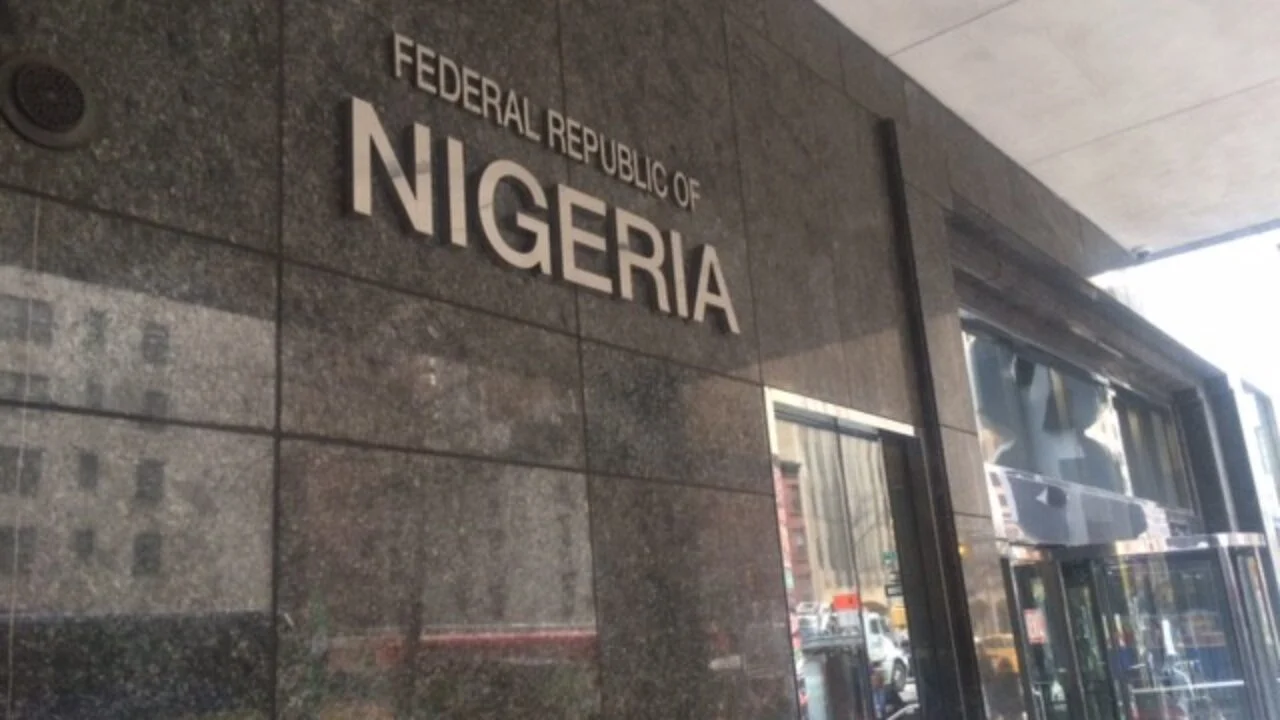
New York Consulate installs machines for 10-year passport
-

 News2 years ago
Zero Trust Architecture in a Remote World: Securing the New Normal
-
 Entertainment4 years ago
Phyna emerges winner of Big Brother Naija Season 7
-
 Headlines2 years ago
Nigeria Customs modernisation project to check extortion of traders
-
 Economy2 years ago
We generated N30.2 bn revenue in three months – Kano NCS Comptroller