
Headlines
1.2m students to benefit from first phase of education loan – First Lady

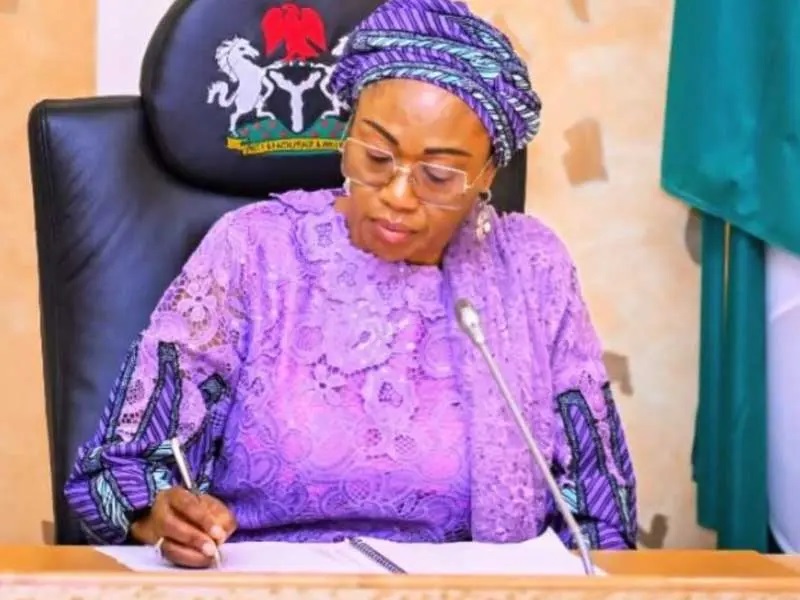
The First Lady of Nigeria, Sen. Oluremi Tinubu says no fewer than 1.2 million students will benefit from the first phase of the students education loan scheme which commenced on May 24.
Mrs Tinubu disclosed this in the State House on Sunday during the Nigerian Youth Celebration, with the theme “Becoming: Pathway to Success, in commemoration of the first anniversary of President Tinubu’s administration.
In her words, “It is noteworthy that the administration of President Tinubu has been exceptionally youth-friendly.
“The administration has demonstrated commitment to youth inclusion in empowerment and governance.
“This is evident in the unprecedented appointment of young leaders as Ministers, heads of agencies and parastatals, as well as the full implementation of the Students Loan Scheme.”
Mrs Tinubu expressed her commitment to supporting and encouraging the youths, particularly through her Renewed Hope Initiative (RHI).
She said the RHI is geared towards complementing the efforts of Mr President, in the areas of education, agriculture, social investment and economic empowerment.
The first lady further assured the youths that the current administration would do its best to make Nigerians happy.
Also speaking at the event, the Director-General of the National Information Technology Development Agency (NITDA), Kashifu Inuwa Abdullahi CCIE, said President Bola Tinubu’s first year in office has significantly influenced the technology sector and established Nigeria as a global hub for talent.
Inuwa said that President Tinubu’s Renewed Hope Agenda, which had eight priority areas, propelled the Federal Ministry of Communications and Digital Economy to recreate her five key areas of development.
He said the eight priority areas included reforming the economy, strengthening national security, boosting agriculture, unlocking energy and natural resources, and enhancing infrastructure and transportation.
Others were focusing on education, health, social investment, accelerating diversification through industrialization, digitization, creative manufacturing & innovation, and improving governance.
Hinging on the seventh priority area, which was accelerating diversification through industrialization, digitization, creative manufacturing, and innovation, Inuwa said the agency came up with a strategic roadmap and action plan as a guide.
The director-general said the roadmap focused on eight areas, which were fostering digital literacy and cultivating talent, building a robust technology research ecosystem, and strengthening policy implementation and legal frameworks.
“Other action plans included promoting inclusive access to digital infrastructure and services, strengthening cybersecurity and enhancing digital trust, and nurturing an innovative and entrepreneurial ecosystem.
“In achieving the digital literacy action plan, we developed the National Digital Literacy Framework, which was targeted at achieving 95 per cent digital literacy by 2030.
“We floated a mid-term target of achieving 70 per cent by 2027, which within the four years of President Tinubu’s administration, should be achieved.
“We have also collaborated with the Ministry of Education to review schools’ curricula and infuse digital literacy in our formal education system.
“We had other initiatives targeting women, children, people with special needs, artisans, and civil servants, so we can carry everyone to achieve that 95 per cent digital literacy,’’ he said.
On the second pillar, he said the agency had forged collaborations both locally and internationally to enable it to engage in research and development that could drive national security.
On the third, Inuwa said the agency was working on and reviewing the Digital Public Infrastructure Standard, BlockChain Policy, and Data Strategy to promote open data and innovation.
“On promoting access to digital infrastructure and services, we have so many initiatives to reach the underserved and unserved communities and connect citizens so that everybody will be part of this digital revolution.
“We also signed an agreement with Cisco, where we will work together to design digital learning hubs to be implemented across the country.
“We will co-design, co-create, and execute all the initiatives together, and that will bring other development partners and government agencies to be part of it,’’ he said.
The NITDA boss said the agency created awareness programmes, hackathons, engagement with citizens, collaboration with other countries, ministries, departments, and agencies in Nigeria to strengthen cyberspace, and shared intelligence and analysis reports.
On nurturing innovative and entrepreneurial ecosystems, Inuwa said the agency had been encouraging talents to build digital offerings in the country.
“Under this roadmap, we have identified the Nigerian Start-up Act as a tool to provide a legal and institutional framework to promote innovative start-ups.
“We launched the start-up portal about four months ago; we have invited start-ups to register, and we have over 12,000 start-ups that have registered, and we are doing the labelling.’’
The NITDA boss explained that the labelling was a process whereby all start-ups could register for easy identification and to know their strengths and weaknesses.
He also recalled that the Federal Executive Council, on May 14, approved the use of the Nigerian facility in California, U.S.A., to be the Nigerian start-up house.
Inuwa added that the facility would promote technology transfer between the Nigerian start-up ecosystem and the US start-up ecosystem.
On fostering strategic partnerships and collaboration, he said the agency was synergizing with relevant stakeholders to ensure that efforts made in the ecosystem had an impact.
On the eight pillars of cultivating a vibrant organisational culture and agile workforce in NITDA, he said the agency needed to be on par with technology trends, hence the continuous in-house training.
“We started with the culture of reorientation and cultural assessment, and we believe we have made significant steps.
“Formerly, NITDA had about 90 per cent of its workers from the mainstream public service, but today we are more like a private sector when it comes to efficiency and productivity,’’ he said.
Inuwa added that the agency was committed to making the remaining years of President Tinubu successful by ensuring Nigerians were carried along to derive the benefit of the digital economy.
He encouraged Nigerians to be patient with the administration, adding that the government was taking steps to ameliorate the economic hardships of the people.






Adamawa Business School Hosts Workshop on New Tax Reform Law
By Ibrahim Abubakar Jimeta
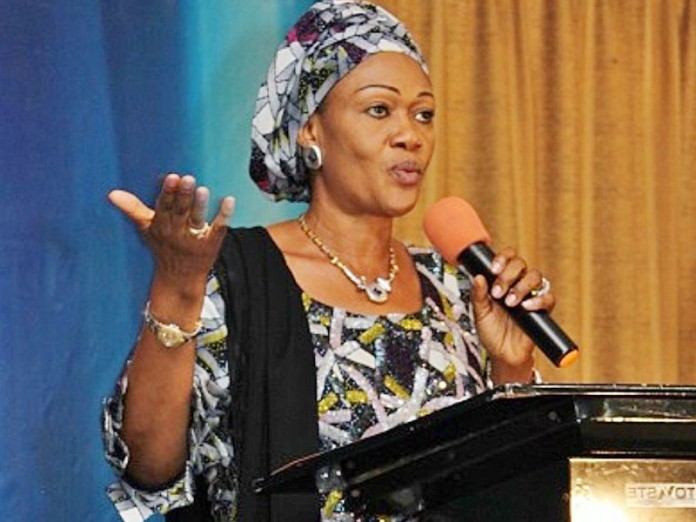
The Adamawa Business School (ABS) has organised a high-level training and sensitisation workshop on the New Tax Reform Law in Nigeria, aimed at enhancing understanding of recent fiscal reforms and strengthening public sector administration in Adamawa State.
The workshop, held in collaboration with the Office of the Head of the Civil Service of Adamawa State and supported by the Federal Inland Revenue Service (FIRS), brought together Permanent Secretaries, senior public servants, tax officials, and policy experts to examine the implications of the new tax framework for governance and fiscal sustainability.
Speaking during the opening session, the Co-Founder of Adamawa Business School, Mallam Jamilu Yusuf, described the workshop as a strategic intervention designed to bridge knowledge gaps and improve policy implementation within Ministries, Departments, and Agencies (MDAs).
Yusuf explained that the engagement was organised under the school’s Public Policy Support Initiative, a non-profit platform that provides research, training, and capacity development support to government institutions. He noted that Nigeria’s evolving tax landscape, driven by Finance Acts, administrative reforms, and digital innovations, requires senior public officials to be well-informed in order to translate policy into effective practice.
According to him, Permanent Secretaries and top civil servants play a crucial role in ensuring compliance and successful implementation of tax reforms at the sub-national level, stressing that inadequate understanding of tax laws often creates implementation challenges that negatively affect citizens and institutions.
He reaffirmed Adamawa Business School’s commitment to supporting the state government through policy-focused learning, dialogue, and partnerships that promote transparency, fiscal sustainability, and improved service delivery.
In his remarks, the Head of the Adamawa State Civil Service, Isa Shehu Ardo, mni, emphasised the importance of equipping senior public servants with a clear understanding of the new tax laws. He noted that Permanent Secretaries, as the most senior career officers in the public service, must fully comprehend the reforms in order to guide implementation and avoid difficulties that often arise from poor information and limited awareness.
Delivering the welcome address on behalf of the Office of the Head of Civil Service, the Permanent Secretary, Establishment and Training, Fabian S. Wambai, commended Adamawa Business School for organising the workshop as part of its corporate social responsibility.
Wambai described the new national tax law as a major reform with far-reaching implications for public finance, compliance, and economic stability. He said the workshop provided a valuable opportunity for Permanent Secretaries, as accounting officers and senior administrators, to deepen their understanding of the law and its impact on government operations and engagements with the private sector.
He urged participants to actively engage in discussions, interact with resource persons, and leverage the knowledge gained to strengthen institutional compliance, improve advisory roles to political leadership, and promote transparent and accountable governance.
The workshop featured sessions led by experienced tax professionals, focusing on the provisions of the new tax reform law, its implications for public financial management, and strategies for effective collaboration between federal and state institutions.
Participants expressed optimism that the training would enhance policy implementation, reduce administrative challenges, and contribute to a more efficient and fiscally informed public service in Adamawa State.
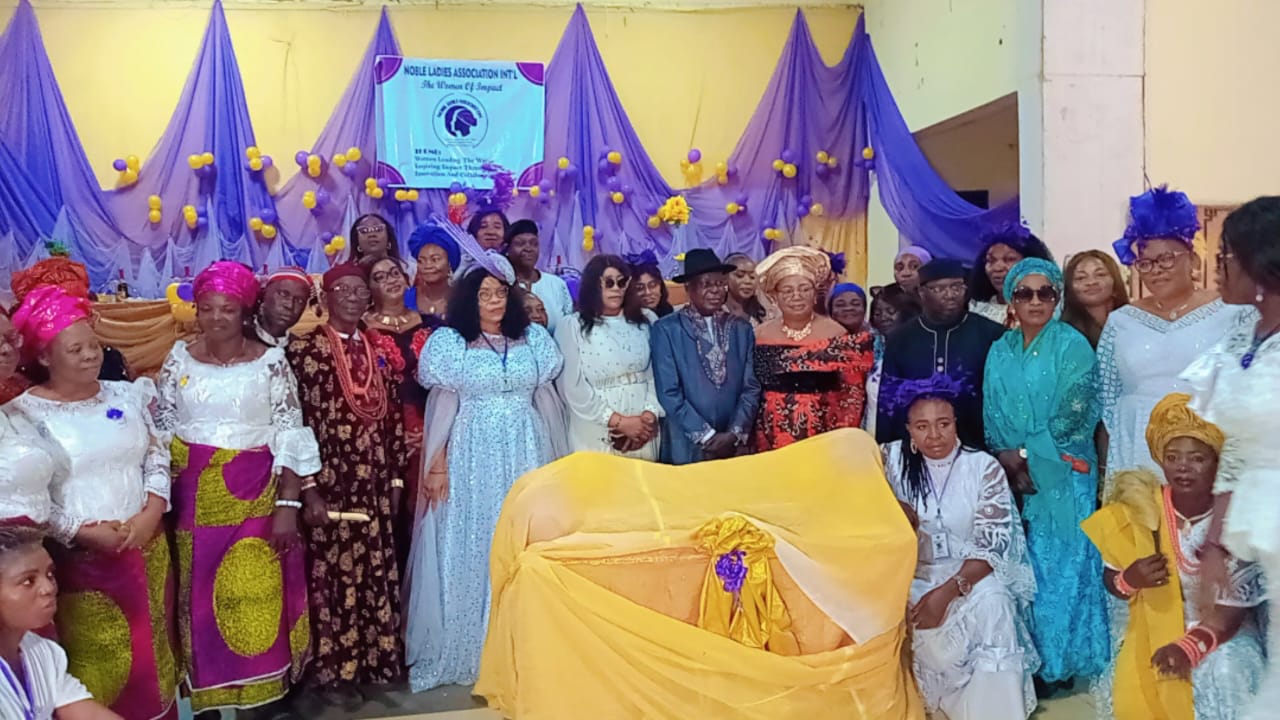
Women from diverse backgrounds across Nigeria and beyond gathered at the Art and Culture Auditorium, Abuja, for the inauguration and convention of the Noble Ladies Association. The event, led by the association’s Founder and “visionary and polished Queen Mother,” Mrs. Margaret Chigozie Mkpuma, was a colourful display of feminine elegance, empowerment, and ambition.
The highly anticipated gathering, attended by over 700 members and counting, reflected the association’s mission to help women realise their potential while shifting mindsets away from dependency and over-glamorization of the ‘white collar job.’ According to the group, progress can be better achieved through innovation and creativity. “When a woman is able to earn and blossom on her own she has no reason to look at herself as a second fiddle,” the association stated.
One of the association’s standout initiatives is its women-only investment platform, which currently offers a minimum entry of ₦100,000 with a return of ₦130,000 over 30 days—an interest rate of 30 percent. Some members invest as much as ₦1 million, enjoying the same return rate. Mrs. Mkpuma explained that the scheme focuses on women because “women bear the greater brunt of poverty” and the platform seeks “to offer equity in the absence of economic equality.”
Education is also central to the Noble Ladies’ mission, regardless of age. Their mantra, “start again from where you stopped,” encourages women to return to school or upgrade their skills at any stage in life. The association believes that financial stability is vital in protecting women from cultural practices that dispossess widows of their late husbands’ assets, while also enabling them to raise morally and socially grounded families.
Founded on the vision of enhancing women’s skills and achieving financial stability, the association rests on a value system that discourages pity and promotes purpose. “You have a purpose and you build on that purpose to achieve great potentials and emancipation,” Mrs. Mkpuma said.
A criminologist by training and entrepreneur by practice, she cautions against idleness while waiting for formal employment. “There are billions in the informal and non-formal sectors waiting to be made,” she said, rejecting the “new normal of begging” and urging people to “be more introspective to find their purpose in life and hold on to it.”
Mrs. Mkpuma’s management style keeps members actively engaged, focusing on vocational skills and training to prepare them for competitive markets. She is exploring “innovative integration of uncommon technologies” and is already in talks with international franchises to invest in Nigeria, with Noble Ladies as first beneficiaries.
The association’s core values include mutual respect, innovation, forward-thinking, equal opportunity, and financial emancipation. With plans underway to establish a secretariat in the heart of Abuja, the group aims to expand its impact.
The event drew high-profile guests, including former Inspector General of Police, Mike Okiro, and a host of VIPs, marking a significant milestone in the association’s drive for women’s empowerment.
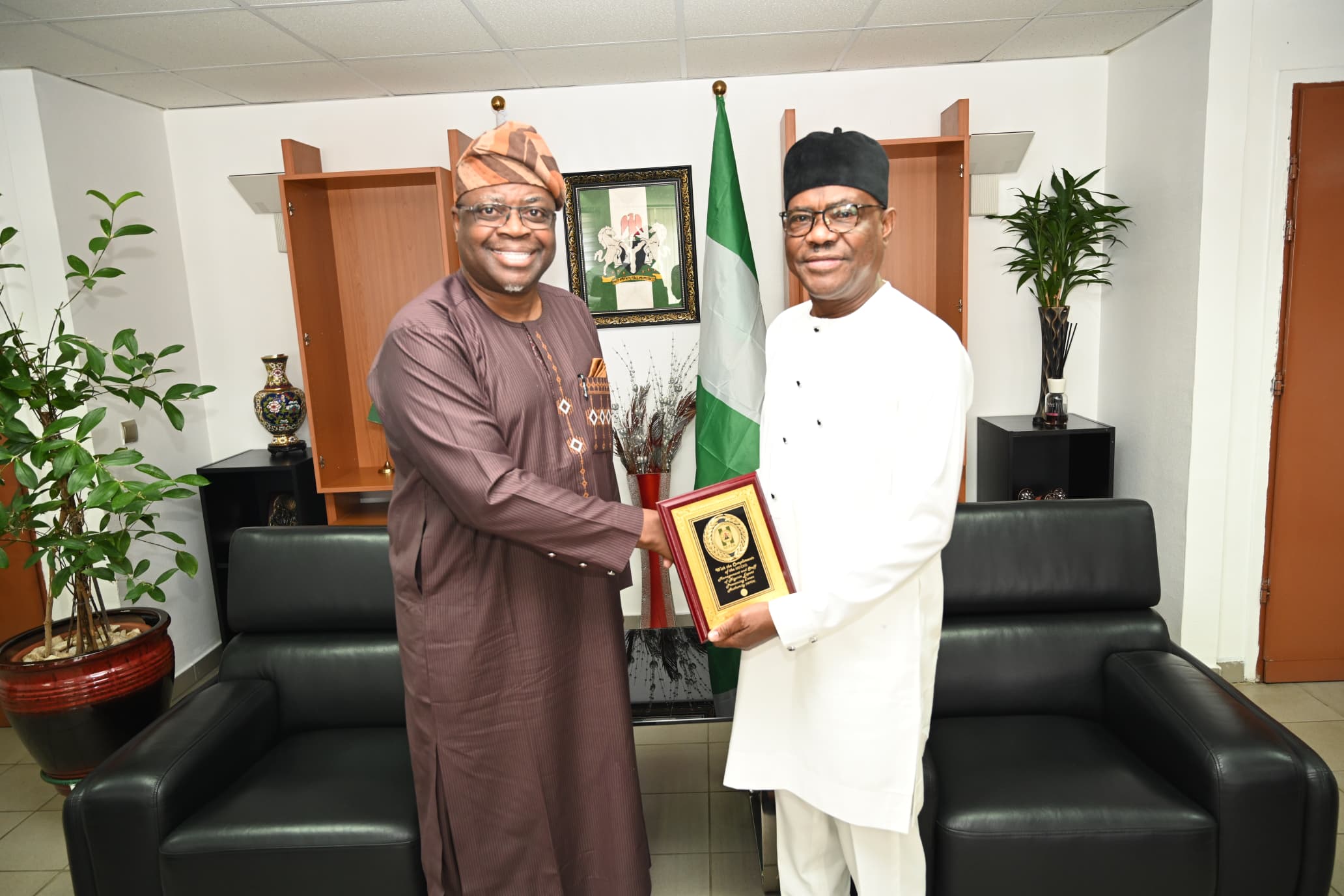
The Nigeria Export Processing Zones Authority (NEPZA) has stepped in to resolve the dispute between the Federal Capital Territory Administration and the Abuja Technology Village (ATV), a licensed Free Trade Zone, over the potential revocation of the zone’s land title.
Dr. Olufemi Ogunyemi, the Managing Director of NEPZA, urged ATV operators and investors to withdraw the lawsuit filed against the FCT administration immediately to facilitate a roundtable negotiation.
Dr. Ogunyemi delivered the charge during a courtesy visit to the Minister of the Federal Capital Territory, Barrister Nyesom Wike, on Thursday in Abuja.
You will recall that the ATV operators responded to the revocation notice issued by the FCT administration with a lawsuit.
Dr. Ogunyemi stated that the continued support for the growth of the Free Trade Zones Scheme would benefit the nation’s economy and the FCT’s development, emphasizing that the FCT administration recognized the scheme’s potential to accelerate industrialisation.
Dr. Ogunyemi, also the Chief Executive Officer of NEPZA, expressed his delight at the steps taken by the FCT minister to expand the economic frontier of the FCT through the proposed Abuja City Walk (ACW) project.
Dr. Ogunyemi further explained that the Authority was preparing to assess all the 63 licensed Free Trade Zones across the country with the view to vetting their functionality and contributions to the nation’s Foreign Direct Investment and export drives.
“I have come to discuss with His Excellency, the Minister of the Federal Capital Territory on the importance of supporting the ATV to succeed while also promoting the development of the Abuja City Walk project. We must work together to achieve this for the good of our nation,” he said.
On his part, the FCT Minister reiterated his unflinching determination to work towards President Bola Ahmed Tinubu’s Renewed Hope Agenda by bringing FDI to the FCT.
“We must fulfil Mr. President’s promises regarding industrialization, trade, and investment. In this context, the FCT will collaborate with NEPZA to review the future of ATV, a zone that was sponsored and supported by the FCT administration,” Wike said.
Barrister Wike also said that efforts were underway to fast-track the industrialisation process of the territory with the construction of the Abuja City Walk.
The minister further said the Abuja City Walk project was planned to cover over 200 hectares in the Abuja Technology Village corridor along Airport Road.
According to him, the business ecosystem aimed to create a lively, mixed-use urban center with residential, commercial, retail, hospitality, medical, and institutional facilities.
He added that the ACW would turn out to be a high-definition and world-class project that would give this administration’s Renewed Hope Agenda true meaning in the North-Central Region of the country.
Barrister Wike also indicated his continued pursuit of land and property owners who failed to fulfil their obligations to the FCT in his determination to develop the territory.
Responsible Gambling Betting Sites

Inclusive Development Launches Policy Guide to Strengthen Civic Engagement in Nigeria

APC Support Groups Back Renewed Hope Network as Peters Predicts Wider Coalition for Tinubu’s 2027 Bid

Facebook, Instagram Temporarily Allow Posts on Ukraine War Calling for Violence Against Invading Russians or Putin’s Death

Movie download platform, Netnaija, announces closure

Nigeria, Other West African Countries Facing Worst Food Crisis in 10 Years, Aid Groups Say

-
Headlines5 years ago
Facebook, Instagram Temporarily Allow Posts on Ukraine War Calling for Violence Against Invading Russians or Putin’s Death
-
Entertainment3 years ago
Movie download platform, Netnaija, announces closure
-
Headlines5 years ago
Nigeria, Other West African Countries Facing Worst Food Crisis in 10 Years, Aid Groups Say
-
 Foreign4 years ago
New York Consulate installs machines for 10-year passport
-

 News2 years ago
Zero Trust Architecture in a Remote World: Securing the New Normal
-
 Entertainment4 years ago
Phyna emerges winner of Big Brother Naija Season 7
-
 Headlines2 years ago
Nigeria Customs modernisation project to check extortion of traders
-
 Crime4 years ago
EFCC Arrests Ex-Zamfara Governor Yari Over ₦84bn Fraud