
News
Nigeria’s FX Policy Targeted at Preserving Naira Value, Says Emefiele

The Governor of the Central Bank of Nigeria (CBN), Mr. Godwin Emefiele, Monday said the objectives of the country’s exchange rate policy were to preserve the value of the domestic currency and maintain a favourable external reserves position.
Emefiele stressed that the central bank’s foreign exchange (FX) regime further seeks to ensure external balance without compromising the need for internal balance and the overall goal of macroeconomic stability.
The central bank governor also said the overarching goals of the apex bank includes to achieve exchange rate stability that ensures a viable external sector, anchor inflationary expectations and improve and support economic growth.
The CBN governor who spoke at the opening of the Regional Course on Exchange Rate Regimes and Policies, organised by the West African Institute for Financial and Economic Management (WAIFEM) with participants from Nigeria, The Gambia, Ghana, Liberia and Sierra Leone in attendance, also said the thrust of exchange rate management by the bank was to allow the market system to determine the exchange rate parity in an efficient manner devoid of the activities of speculators and rent-seekers.
He pointed out that the bank’s choice of exchange rate regime had at all times been determined by the prevailing economic fundamentals, adding that it was not uncommon that the dynamics of the external and domestic economy lead to a change in regime.
He said indeed, global economic and financial crisis, pandemics, currency crisis, commodity supply shocks and geopolitical tensions to name a few determines the choice of exchange rate regime.
The bank currently operates a free-float regime, whereby it intervenes in the market whenever necessary.
Emefiele, specifically noted that for developing economies including Nigeria where the demand for imports remained high, an appropriate exchange rate regime was required to safeguard capital outflow and ring-fence the external reserves.
Represented at the capacity building course by the CBN Deputy Director, Monetary Policy Department, Mrs. Omolara Duke, Emefiele further explained that the choice of an exchange rate regime by a country was largely dependent on the assessment of its specific macroeconomic objectives, state of economic development and the focus of its foreign exchange policy.
He said, “For the advanced economies, the exchange rate regime galvanises towards the floating regime, as the majority of them have convertible currencies and are therefore less exposed to the vagaries of currency fluctuations.
“Developing economies are more cautious towards protecting their economies from adverse movements of convertible currencies which they trade with and therefore avoid regimes that will expose them to speculative attacks and currency crisis and desire to promote long-term growth.”
He added, “The choice of their exchange rate regime consequently tilts toward preventing massive capital inflows and currency crises and promoting trade.
“The choices of an exchange regime that will achieve exchange rate stability, capital mobility, and independent monetary policy simultaneously often leave a decision to achieve two out of these three outcomes. An exchange rate regime, therefore, must be credible and reflect the underlying fundamentals of the economy.
“Countries rarely take the extremes of the regimes, that is the fixed or the free-floating except in certain cases. Most countries exhibit some control over their currencies within the broad spectrum of the two extremes.”
Emefiele, nevertheless said the bank had undertaken various initiatives to support the diversification of the Nigerian economy from the reliance on crude-oil export as a major source of foreign exchange, adding that the CBN development finance initiatives provide credit for the real sector to stimulate domestic production, particularly in the agriculture and industrial sectors that have huge potential to earn foreign exchange.
He said a major goal is to reduce the pressure on the domestic currency adding that since the inception of the CBN in 1959, the bank had undertaken many exchange rate management regimes – each with its challenges and success.
However, Director-General of WAIFEM, Dr. Baba Musa, said the fact that all currencies in WAIFEM member-countries are non-convertible raises the need for policymakers to appreciate the skills necessary to manage exchange rates.
He said the reasons justifying the concentration of attention on exchange rate were not farfetched as exchange rates affect cross-border economic transactions.
According to him, trade, investment, finance, tourism, and migration, among others are profoundly influenced by international monetary policies, adding that as economies become globalised more firms, investors and workers find their fortunes linked to the exchange rate and its impact on trade and financial flows.
Musa said governments in several developing countries governments have searched for alternatives to the uncertainty that could prevail on international currency markets, and rushed to peddle currency nostrums, urging a turn toward dollarisation, managed floating, nominal anchors, target bands, or other options.
According to him, there are both theoretical and empirical reasons to expect globalisation to heighten the importance of the exchange rate.
He said, “Theoretically, open-economy macroeconomic principles imply that capital mobility profoundly affects exchange rate policy choices. As a result, the government of a financially integrated economy faces a choice between monetary policy autonomy and a fixed exchange rate.
“If governments opt for a fixed rate, capital mobility makes impossible a monetary stance different from that of the anchor currency.
“Alternatively, if governments opt to sustain an independent monetary policy, they must allow their currencies to float. These constraints mean that the economics and politics of monetary and exchange rate policy are likely to be very different in an open economy than an economy that is not.”
Musa said in as much as international economic integration involves increased exposure to international financial and commercial flows, it heightens concerns of those involved or exposed to international trade and finance.
Nonetheless, he noted that all the currencies in WAIFEM member-countries are non-convertible hence the importance for policy-makers to appreciate the skills necessary to manage exchange rates.
He said the institute was established by the central banks of The Gambia, Ghana, Liberia, Nigeria and Sierra Leone in 1996, principally to build capacity for improved macroeconomic and financial and debt management in the constituent member countries.
He said WAIFEM has the mandate to conduct research and consultancy in the area of macroeconomic policy management and promotion of best practices, adding that so far, the institute has successfully executed over 828 courses since inception, benefitting more than 23,122 participants from the sub-region and beyond.
Essentially, the institute seeks to develop, on a sustainable basis, expertise in the fields of macroeconomics, debt, financial sector management as well as governance and institutional development among the staff of central banks, ministries of finance and economic planning and other public sector agencies with core economic management responsibilities.








Fresh allegations of large-scale financial irregularities, abuse of office, and governance breakdown have engulfed the Nigeria Social Insurance Trust Fund (NSITF), following a series of petitions by the Arewa Revival Project, a civic accountability and good-governance advocacy group, calling for urgent investigations into the activities of the Managing Director/Chief Executive Officer, Mr. Oluwaseun Mayomi Faleye.
The group has formally written to the Economic and Financial Crimes Commission (EFCC), the Independent Corrupt Practices and Other Related Offences Commission (ICPC), the Office of the Auditor-General of the Federation, the Federal Ministry of Finance under the Whistleblower Policy, the Federal Ministry of Labour and Employment, the NSITF Management Board, as well as organised labour bodies, including the Nigeria Labour Congress (NLC) and the Trade Union Congress (TUC).
At the centre of the controversy are allegations involving the management of approximately ₦297,019,145,288.60 in workers’ funds collected under the Employees’ Compensation Act (ECA) between January 2 and October 9, 2025.
Workers’ Funds, Not Government Revenue
The Employees’ Compensation Scheme is funded through compulsory employer contributions of one per cent of payroll, designed to provide compensation to Nigerian workers who suffer injury, disability, or death in the course of employment.
According to multiple senior NSITF officials cited in investigative reports, the funds administered by NSITF are not government revenue, but trust funds belonging exclusively to Nigerian workers.
“This is not government money. This is workers’ money, contributed mandatorily under the law,” one senior official was quoted as saying. “Every kobo is supposed to be protected by layers of checks and balances.”
₦243.2bn Allegedly Spent Without Board Approval
Documents reviewed by investigators indicate that out of the total inflow of ₦297,019,145,288.60, expenditures amounting to ₦243,203,518,621.17 were recorded within the same period.
Multiple sources allege that a significant portion of this expenditure was carried out without the approval of the NSITF Management Board, in violation of the NSITF Act and existing federal financial regulations.
Officials familiar with the records described the development as a “complete collapse of safeguards” meant to protect workers’ funds.
‘No Approval Limit’ Resolution Raises Alarm
Central to the allegations is an internal document dated March 4, 2025, reportedly extracted from the minutes of the 46th Executive Committee (EXCO) meeting of NSITF, chaired by Mr. Faleye.
According to the document, financial approval limits were set as follows:
- Other General Managers: ₦25,000
- General Manager (Finance): ₦50,000
- Other Executive Directors: ₦750,000
- Executive Director (Finance and Investment): ₦1,000,000

However, under the same resolution, the Managing Director/Chief Executive Officer allegedly approved “no limit” for his own spending authority.
Sources allege that this effectively granted Mr. Faleye unrestricted powers to approve payments of any amount without recourse to the Board or external oversight.
“He simply wrote and signed a document granting himself ‘No Approval Limit’,” a senior official disclosed. “There is absolutely no legal basis for this in the NSITF Act or federal financial regulations.”
Under existing federal thresholds, Managing Directors of government parastatals are reportedly capped at ₦30 million for works and ₦10 million for goods and services, subject to board oversight.
Over 100 Bank Accounts Linked to One BVN
Perhaps the most startling allegation involves the operation of over 100 bank accounts allegedly linked to a single Bank Verification Number (BVN) belonging to Mr. Faleye.
Documents reportedly show that the BVN, registered on June 10, 2015, with Guaranty Trust Bank, Ajose Adeogun Branch, is associated with numerous accounts, some of which allegedly received funds traceable to NSITF operations.
“The scale is staggering,” one insider said. “You don’t run over 100 accounts accidentally. This points to systematic structuring.”
$7.3m and Hundreds of Millions of Naira Traced
In a separate document obtained by investigators, alleged inflows of millions of dollars and hundreds of millions of naira were traced to accounts linked to Mr. Faleye and entities reportedly associated with him.
The transactions listed include:
- Faleye Oluwaseun Mayomisola, GTBank USD Account 0111206422 – $336,917.00
- Faleye Oluwaseun Mayomisola, GTBank USD Account 0004754113 – $6,743,421.00
- Faleye Oluwaseun Mayomisola, GTBank NGN Account 0004754096 – ₦291,182,605.00
- Fides & Fiducia Client Account, Access Bank NGN Account 0718896883 – ₦584,950,000.00
- Fides & Fiducia, Access Bank USD Account 0690403396 – $626,279.00
- Fides & Fiducia, Zenith Bank NGN Account 1013806407 – ₦93,757,500.00
- Pluschess Limited, Zenith Bank USD Account 071315271 – $20,000.00
- Faleye Oluwaseun Mayomisola, GTBank USD Account 3001101016 – $75,558.00
The total dollar inflow alone is estimated at over $7.3 million, excluding naira-denominated transactions.
“These are not small transfers,” a source familiar with the documents said. “The volume, frequency, and structuring suggest deliberate efforts to move and possibly conceal funds.”
₦5.53bn Commission Payments Questioned
Further allegations relate to commission payments totalling ₦5,533,517,486.90, allegedly approved and paid without the consent of the NSITF Management Board or the supervising Ministry.
The payments reportedly include:
- ₦1,379,186,010.00 – Assurance Services ST ADBA Ltd (09/10/2025)
- ₦865,000,000.00 – TAGG Global Resources Ltd (18/03/2025)
- ₦683,777,666.40 – Rate Seal Support & Project Ltd (17/09/2025)
- ₦659,303,810.50 – Rate Seal Support & Project Ltd (16/05/2025)
- ₦648,750,000.00 – Rate Gold Solution Nig Ltd (16/05/2025)
- ₦648,750,000.00 – Gold Solution Nig Ltd (01/08/2025)
- ₦648,750,000.00 – TAGG Global Resources Ltd (01/08/2025)

Sources allege that the commissions ranged between 15 per cent and 20 per cent, and were paid without lawful authority.
Board Absence and Governance Vacuum
Mr. Faleye was appointed Managing Director in July 2023, while the NSITF Management Board was reportedly not constituted until around January 2025, creating a governance gap of over one year.
“The Act expressly forbids Executive Management from spending funds without board approval,” a top official explained. “If there is no board, spending should not take place.”
Arewa Revival Project Condemns Alleged Acts
Reacting to the allegations, the Arewa Revival Project, under the leadership of Hon. Muttakka Ahmed Ibrahim, condemned the alleged acts, describing them as a grave betrayal of public trust if proven.
The group called on President Bola Ahmed Tinubu, as well as all relevant anti-corruption and regulatory authorities, to urgently investigate the allegations to protect workers’ funds and restore confidence in public institutions.
Responses from Officials
When contacted, Mr. Faleye reportedly stated that he was not aware of the allegations. However, when questioned about the dollar accounts and alleged inflows of over $7.3 million, he reportedly ended the call abruptly.
The Permanent Secretary of the Ministry of Labour, Mr. Salihu Usman, reportedly denied prior knowledge of the alleged transactions, while the Chairman of the NSITF Board, Mr. Shola Olofin, requested time to verify the claims.
Presumption of Innocence
All allegations remain unproven and subject to investigation. Analysts note that the unfolding developments represent a major test of Nigeria’s public finance accountability framework, particularly in institutions entrusted with workers’ welfare.
As investigations commence, millions of Nigerian workers await answers over the safety of funds meant to protect them in times of injury, disability, and loss.


Adamawa Business School Hosts Workshop on New Tax Reform Law
By Ibrahim Abubakar Jimeta
The Adamawa Business School (ABS) has organised a high-level training and sensitisation workshop on the New Tax Reform Law in Nigeria, aimed at enhancing understanding of recent fiscal reforms and strengthening public sector administration in Adamawa State.
The workshop, held in collaboration with the Office of the Head of the Civil Service of Adamawa State and supported by the Federal Inland Revenue Service (FIRS), brought together Permanent Secretaries, senior public servants, tax officials, and policy experts to examine the implications of the new tax framework for governance and fiscal sustainability.
Speaking during the opening session, the Co-Founder of Adamawa Business School, Mallam Jamilu Yusuf, described the workshop as a strategic intervention designed to bridge knowledge gaps and improve policy implementation within Ministries, Departments, and Agencies (MDAs).
Yusuf explained that the engagement was organised under the school’s Public Policy Support Initiative, a non-profit platform that provides research, training, and capacity development support to government institutions. He noted that Nigeria’s evolving tax landscape, driven by Finance Acts, administrative reforms, and digital innovations, requires senior public officials to be well-informed in order to translate policy into effective practice.
According to him, Permanent Secretaries and top civil servants play a crucial role in ensuring compliance and successful implementation of tax reforms at the sub-national level, stressing that inadequate understanding of tax laws often creates implementation challenges that negatively affect citizens and institutions.
He reaffirmed Adamawa Business School’s commitment to supporting the state government through policy-focused learning, dialogue, and partnerships that promote transparency, fiscal sustainability, and improved service delivery.
In his remarks, the Head of the Adamawa State Civil Service, Isa Shehu Ardo, mni, emphasised the importance of equipping senior public servants with a clear understanding of the new tax laws. He noted that Permanent Secretaries, as the most senior career officers in the public service, must fully comprehend the reforms in order to guide implementation and avoid difficulties that often arise from poor information and limited awareness.
Delivering the welcome address on behalf of the Office of the Head of Civil Service, the Permanent Secretary, Establishment and Training, Fabian S. Wambai, commended Adamawa Business School for organising the workshop as part of its corporate social responsibility.
Wambai described the new national tax law as a major reform with far-reaching implications for public finance, compliance, and economic stability. He said the workshop provided a valuable opportunity for Permanent Secretaries, as accounting officers and senior administrators, to deepen their understanding of the law and its impact on government operations and engagements with the private sector.
He urged participants to actively engage in discussions, interact with resource persons, and leverage the knowledge gained to strengthen institutional compliance, improve advisory roles to political leadership, and promote transparent and accountable governance.
The workshop featured sessions led by experienced tax professionals, focusing on the provisions of the new tax reform law, its implications for public financial management, and strategies for effective collaboration between federal and state institutions.
Participants expressed optimism that the training would enhance policy implementation, reduce administrative challenges, and contribute to a more efficient and fiscally informed public service in Adamawa State.
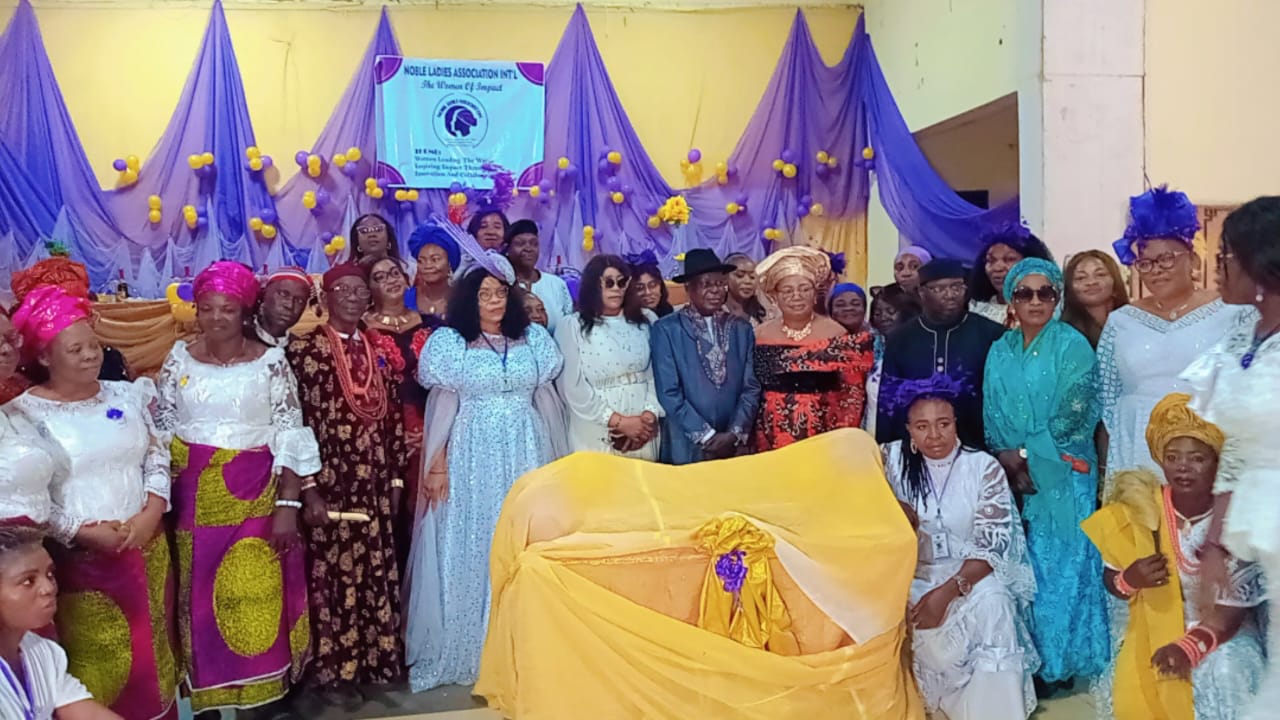
Women from diverse backgrounds across Nigeria and beyond gathered at the Art and Culture Auditorium, Abuja, for the inauguration and convention of the Noble Ladies Association. The event, led by the association’s Founder and “visionary and polished Queen Mother,” Mrs. Margaret Chigozie Mkpuma, was a colourful display of feminine elegance, empowerment, and ambition.
The highly anticipated gathering, attended by over 700 members and counting, reflected the association’s mission to help women realise their potential while shifting mindsets away from dependency and over-glamorization of the ‘white collar job.’ According to the group, progress can be better achieved through innovation and creativity. “When a woman is able to earn and blossom on her own she has no reason to look at herself as a second fiddle,” the association stated.
One of the association’s standout initiatives is its women-only investment platform, which currently offers a minimum entry of ₦100,000 with a return of ₦130,000 over 30 days—an interest rate of 30 percent. Some members invest as much as ₦1 million, enjoying the same return rate. Mrs. Mkpuma explained that the scheme focuses on women because “women bear the greater brunt of poverty” and the platform seeks “to offer equity in the absence of economic equality.”
Education is also central to the Noble Ladies’ mission, regardless of age. Their mantra, “start again from where you stopped,” encourages women to return to school or upgrade their skills at any stage in life. The association believes that financial stability is vital in protecting women from cultural practices that dispossess widows of their late husbands’ assets, while also enabling them to raise morally and socially grounded families.
Founded on the vision of enhancing women’s skills and achieving financial stability, the association rests on a value system that discourages pity and promotes purpose. “You have a purpose and you build on that purpose to achieve great potentials and emancipation,” Mrs. Mkpuma said.
A criminologist by training and entrepreneur by practice, she cautions against idleness while waiting for formal employment. “There are billions in the informal and non-formal sectors waiting to be made,” she said, rejecting the “new normal of begging” and urging people to “be more introspective to find their purpose in life and hold on to it.”
Mrs. Mkpuma’s management style keeps members actively engaged, focusing on vocational skills and training to prepare them for competitive markets. She is exploring “innovative integration of uncommon technologies” and is already in talks with international franchises to invest in Nigeria, with Noble Ladies as first beneficiaries.
The association’s core values include mutual respect, innovation, forward-thinking, equal opportunity, and financial emancipation. With plans underway to establish a secretariat in the heart of Abuja, the group aims to expand its impact.
The event drew high-profile guests, including former Inspector General of Police, Mike Okiro, and a host of VIPs, marking a significant milestone in the association’s drive for women’s empowerment.

APC Support Groups Back Renewed Hope Network as Peters Predicts Wider Coalition for Tinubu’s 2027 Bid

Storm at NSITF as ₦297bn Workers’ Fund Allegations Trail MD/CEO Oluwaseun Mayomi Faleye

Adamawa Business School Hosts Workshop on New Tax Reform Law

Facebook, Instagram Temporarily Allow Posts on Ukraine War Calling for Violence Against Invading Russians or Putin’s Death
Movie download platform, Netnaija, announces closure

Nigeria, Other West African Countries Facing Worst Food Crisis in 10 Years, Aid Groups Say

-
Headlines4 years ago
Facebook, Instagram Temporarily Allow Posts on Ukraine War Calling for Violence Against Invading Russians or Putin’s Death
-
Entertainment3 years ago
Movie download platform, Netnaija, announces closure
-
Headlines4 years ago
Nigeria, Other West African Countries Facing Worst Food Crisis in 10 Years, Aid Groups Say
-
 Foreign4 years ago
New York Consulate installs machines for 10-year passport
-

 News2 years ago
Zero Trust Architecture in a Remote World: Securing the New Normal
-
 Entertainment4 years ago
Phyna emerges winner of Big Brother Naija Season 7
-
 Headlines2 years ago
Nigeria Customs modernisation project to check extortion of traders
-
 Economy2 years ago
We generated N30.2 bn revenue in three months – Kano NCS Comptroller